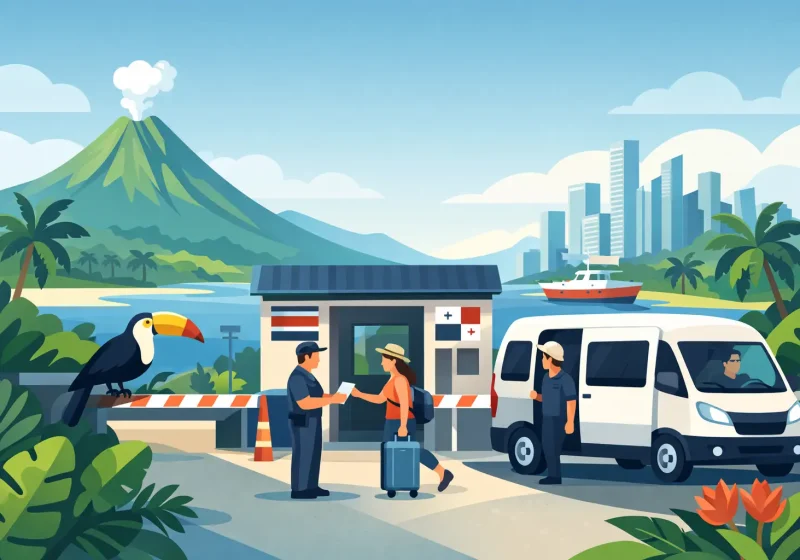

At first glance, getting from Bocas del Toro to Puerto Viejo looks easy.
The two destinations are close on the map, both share a Caribbean atmosphere, and travelers move between them every day.
What many visitors do not realize is that this is not simply a boat ride or a taxi transfer.
A Bocas del Toro to Puerto Viejo transfer involves:
- boat transportation,
- an international border crossing,
- immigration procedures,
- ground transportation,
- and timing that can shift with weather, traffic, and border activity.
When the route is organized properly, it is straightforward and surprisingly manageable.
When travelers try to piece everything together at the last minute, the day can quickly become more complicated than expected.
At Pleasure Ride Costa Rica, we regularly help travelers move between Bocas del Toro, Sixaola, Puerto Viejo, Cahuita, and Costa Rica’s Southern Caribbean coast. Understanding how the route actually works is the easiest way to make the day feel smooth from start to finish.
What Does a Bocas del Toro to Puerto Viejo Transfer Include?
One of the biggest misconceptions about this route is assuming it is a single transportation service from one destination to another.
In reality, most transfers happen in stages.
A typical journey includes:
- Boat transportation from Bocas del Toro to the mainland
- Ground transportation toward the border area
- Panama exit immigration procedures
- Costa Rica entry immigration procedures
- Continued transportation to Puerto Viejo
Because of these multiple stages, coordination becomes extremely important.
The quality of your transfer depends less on the actual distance and more on how smoothly each connection works.
A well-organized transfer means:
- less waiting,
- clearer instructions,
- easier border procedures,
- and a far more relaxed travel day.
How Long Does the Transfer Take?
Most travelers can expect the complete journey to take approximately 3 to 5 hours.
The exact timing depends on:
- border traffic,
- immigration processing,
- weather conditions,
- boat schedules,
- road conditions,
- and your specific pickup and drop-off locations.
During busy travel periods, the journey may take longer.
This is why experienced local operators rarely promise exact arrival times down to the minute.
International border crossings simply involve variables that no transportation company can fully control.
What matters most is realistic planning and good communication throughout the day.
Shared Shuttle or Private Transfer?
For most travelers, this becomes the most important decision.
Both options work well.
The right choice depends on your travel style.
Shared Shuttle Service
A shared shuttle is usually the most affordable organized transportation option.
This works particularly well for:
- solo travelers,
- backpackers,
- couples,
- and travelers with flexible schedules.
Shared transportation provides:
- coordinated border logistics,
- professional drivers,
- organized schedules,
- and significantly less hassle than trying to coordinate public transportation independently.
The trade-off is flexibility.
Shared services operate on fixed schedules and depend on all passengers moving through the process together.
If keeping costs reasonable is a priority, a shared shuttle is often the smartest option.
Private Transfer
A private transfer offers the most comfortable and flexible experience.
This option is ideal for:
- families,
- groups,
- travelers with surfboards,
- visitors carrying extra luggage,
- and anyone wanting a smoother, more personalized journey.
The biggest advantage is control.
Private transportation allows:
- flexible departure timing,
- direct support,
- more luggage flexibility,
- and less waiting throughout the day.
After a border crossing, many travelers appreciate simply knowing exactly who is picking them up and where they are going next.
For travelers on tighter schedules or special trips, that peace of mind can be worth the additional cost.
The Border Crossing: What Travelers Worry About Most
For many visitors, the border crossing itself feels like the most intimidating part of the route.
Fortunately, it is usually much easier than people imagine.
The key is preparation.
Most travelers will need:
- a valid passport,
- proof of onward travel,
- accommodation information,
- and any documentation required based on nationality.
Requirements can change, so it is always wise to verify current entry regulations before traveling.
The crossing itself is very common and thousands of travelers complete it successfully every year.
The biggest delays typically come from:
- missing documents,
- unclear travel plans,
- or travelers searching for paperwork while standing in line.
Keeping everything organized before arrival makes a huge difference.
Border Fees and Travel Requirements
One detail many travelers discover at the last minute is that crossing between Panama and Costa Rica may involve additional government and local fees.
Understanding these costs before travel helps avoid surprises and keeps the border process moving smoothly.
Costa Rica Land Border Exit Tax
If you are crossing from Costa Rica into Panama, Costa Rica requires travelers to pay a land border departure tax.
You have two options:
- Pay online in advance for approximately $8 USD per person
- Pay at the border for approximately $9 USD per person
We recommend paying online before your travel day whenever possible. It can help speed up the border process and reduce waiting time during busy travel periods.
You can make the payment through the official Banco de Costa Rica platform:
Costa Rica Land Border Exit Tax Payment
Keep a copy of your payment confirmation available on your phone or printed for reference.
Bocas del Toro Tourism Fee
Travelers entering Bocas del Toro should also expect to pay local tourism and conservation fees on the Panama side; $8.00 must be paid on arrival.
These fees help support tourism infrastructure and environmental conservation within the archipelago.
Because local regulations and fees may change, we recommend carrying some cash and confirming current requirements before departure.
If you book transportation with Pleasure Ride Costa Rica, our team can help verify the latest border procedures, fees, and documentation requirements before your travel day.
Because border requirements occasionally change, our team regularly updates travelers on current procedures and helps ensure they have everything needed before departure
————————————————————————————————————————————————————-
Why Timing Matters
One of the most common mistakes travelers make is treating this route like a standard hotel transfer.
It is not.
Because the journey involves:
- boats,
- immigration,
- transportation changes,
- and weather conditions,
timing matters much more than the actual distance.
Morning departures are usually the most reliable option because they leave extra buffer time if:
- border lines become busy,
- weather affects schedules,
- or transportation connections run slightly behind.
Later departures can still work, but they offer less flexibility if unexpected delays occur.
If you are planning onward transportation after arriving in Puerto Viejo, it is always wise to leave some margin rather than scheduling everything too tightly.
What Happens When You Arrive in Puerto Viejo?
The ideal transfer does not end at a bus stop or a random meeting point.
A good transfer should leave you exactly where you need to be.
Many accommodations are not actually located in Puerto Viejo town itself.
Travelers may be staying in:
- Playa Cocles,
- Punta Uva,
- Playa Chiquita,
- Manzanillo,
- or other parts of Costa Rica’s Southern Caribbean.
This is why accurate destination information matters when booking transportation.
What travelers often call “Puerto Viejo” can actually refer to several different communities spread across the Caribbean coast.
Door-to-door coordination makes the arrival experience significantly easier.
Why Local Caribbean Knowledge Matters
This route looks straightforward on Google Maps.
The reality is more nuanced.
Local transportation teams familiar with:
- Puerto Viejo,
- Bocas del Toro,
- Sixaola,
- and the border corridor
understand the practical details that travelers usually do not see.
They know:
- where delays typically happen,
- how long border procedures usually take,
- how weather affects schedules,
- and how to coordinate pickups realistically.
Those small details often make the difference between a stressful travel day and a smooth one.
That is one reason many travelers prefer working with Caribbean-based transportation providers rather than relying entirely on generic booking platforms.
Common Questions Travelers Have
Is the route difficult?
Not at all.
It simply has several steps.
With organized transportation and proper planning, the crossing is usually very straightforward.
Can I do it using public transportation?
Yes.
However, public transportation usually means:
- more waiting,
- more transfers,
- less flexibility,
- and greater reliance on local schedules.
Budget travelers often use this option successfully, but it generally requires more effort.
What about luggage?
Standard luggage is rarely an issue.
However, if you are traveling with:
- surfboards,
- oversized bags,
- sports equipment,
- or additional gear,
always mention it when booking.
Small details like this are much easier to manage when planned ahead.
The Best Transfer Is the One That Feels Effortless
The goal of a Bocas del Toro to Puerto Viejo transfer is not simply getting from one place to another.
It is removing unnecessary friction from a day that already includes multiple moving parts.
When transportation is coordinated properly:
- the border feels manageable,
- the timing feels realistic,
- and the journey becomes part of the Caribbean experience instead of a logistical challenge.
You arrive in Puerto Viejo ready for:
- beaches,
- wildlife,
- great food,
- rainforest adventures,
- and the slower rhythm of Costa Rica’s Southern Caribbean.
At Pleasure Ride Costa Rica, we believe good transportation should feel almost invisible — because when everything works smoothly, travelers can focus on enjoying the journey rather than figuring out what happens next.