Crossing between Costa Rica and Panama sounds simple at first.
In reality, it is a travel day that involves:
- transportation timing,
- immigration procedures,
- luggage handling,
- border logistics,
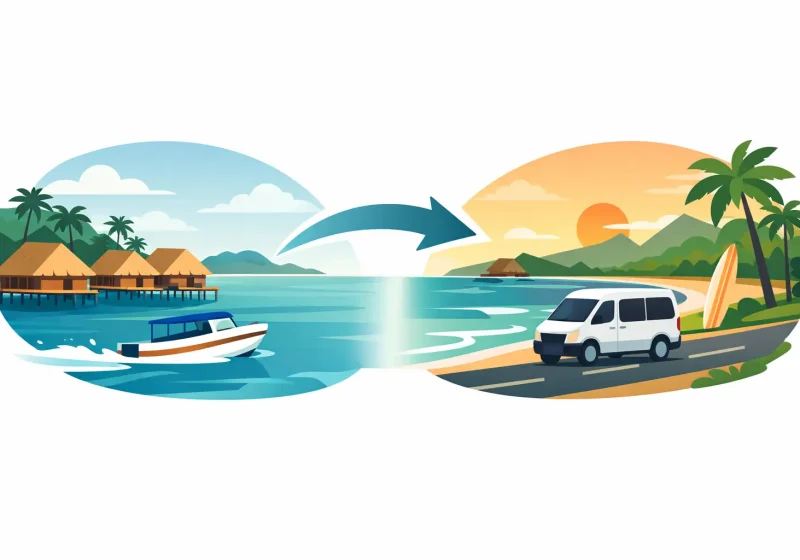
- and in many cases a boat transfer toward Bocas del Toro.
When travelers are prepared, the route is surprisingly manageable.
When they are not, the day can quickly become longer and more stressful than expected.
That is why planning your Costa Rica Panama border transfer properly matters.
At Pleasure Ride Costa Rica, we regularly help travelers move between Puerto Viejo, Cahuita, Sixaola, and Bocas del Toro. Some visitors want the most affordable option possible. Others simply want the smoothest and easiest experience from pickup to arrival. Understanding how the crossing actually works helps travelers avoid unnecessary confusion and enjoy the Caribbean experience from the beginning.
How the Costa Rica Panama Border Transfer Works
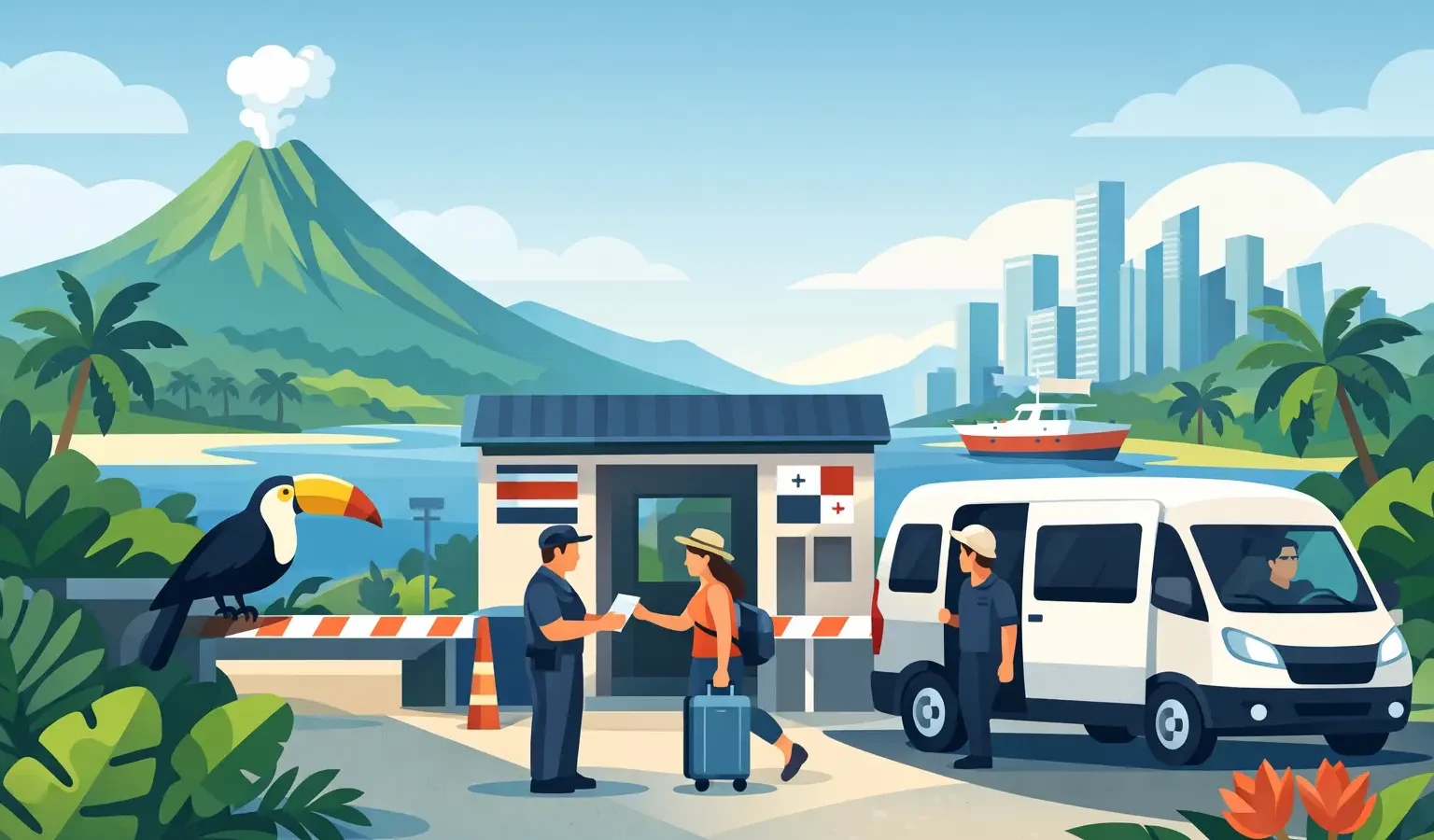
The main land border crossing between Costa Rica and Panama on the Caribbean side is:
- Sixaola on the Costa Rica side,
- and Guabito on the Panama side.
This is the standard crossing point for travelers moving between:
- Puerto Viejo,
- Cahuita,
- and Bocas del Toro.
One important thing travelers often misunderstand is that this is not usually one single uninterrupted transfer.
The journey normally happens in stages:
- Ground transportation to the border
- Exit immigration procedures
- Entry immigration procedures
- Continued transportation on the Panama side
- Boat transfer if heading to Bocas del Toro
Because of this, total travel time depends on much more than road distance alone.
Border lines, bridge traffic, weather conditions, luggage handling, and onward boat schedules all affect the day.
That is why organized transportation and realistic timing matter so much on this route.
Private Transfer vs Shared Shuttle
The best transportation option depends mostly on:
- your budget,
- group size,
- luggage,
- timing,
- and how much flexibility you want.
Private Border Transfer
A private transfer is usually the easiest and most comfortable option.
This works especially well for:
- families,
- groups,
- travelers with surfboards,
- visitors carrying extra luggage,
- couples,
- and travelers on tighter schedules.
The biggest advantage is simplicity.
You receive:
- direct pickup,
- personalized timing,
- more luggage flexibility,
- and less waiting throughout the day.
Private transportation also gives travelers more control if they:
- need an early departure,
- want additional stops,
- travel with children,
- or are coordinating flights and boat connections.
On a border crossing route, fewer moving parts usually means a smoother experience overall.
Shared Shuttle Service
A shared shuttle is the most practical middle-ground option.
It allows travelers to:
- keep costs lower,
- avoid public transportation,
- and still enjoy organized transportation and border-day coordination.
Shared shuttles are especially popular with:
- solo travelers,
- backpackers,
- couples,
- and small groups moving between Puerto Viejo and Bocas del Toro.
The trade-off is flexibility.
Shared transportation operates on fixed schedules, and delays affecting one passenger can impact the timing for everyone.
Still, for many travelers, this remains the best balance between convenience and affordability.
What Documents Should You Bring?
Most border delays are not caused by major problems.
They are usually caused by travelers arriving unprepared.
Before crossing between Costa Rica and Panama, make sure you carry:
- a valid passport,
- proof of onward or return travel,
- accommodation details,
- and any required documents based on your nationality.
Entry requirements can change, so it is always smart to confirm the latest information shortly before your trip instead of relying on outdated online forums or old travel advice.
A few practical tips make the day much easier:
- keep documents accessible,
- save confirmations offline,
- carry a portable charger,
- and keep some small cash available for border-related expenses, snacks, taxis, or unexpected costs.
Border crossings move much faster when travelers can quickly provide what immigration officers request.
Why Timing Matters More Than Travelers Expect
One of the biggest mistakes travelers make is assuming the border transfer is simply a short taxi ride.
It is not.
Even on smooth days, this is still a complete travel day involving:
- transportation changes,
- immigration lines,
- walking,
- waiting,
- and coordination between multiple stages of the route.
Morning departures are usually the safest and easiest choice because they leave buffer time if:
- border lines become busy,
- weather slows transportation,
- or onward boat schedules shift slightly.
Afternoon crossings can still work, but they leave much less room for delays.
This becomes especially important for travelers heading toward Bocas del Toro, where the final boat connection still happens after immigration procedures are complete.
Good transportation companies plan realistically around the full route — not just the first vehicle.
What the Border Crossing Actually Feels Like
Most travelers ask the same question:
“Will this be stressful?”
Usually, it is very manageable when the logistics are clear.
A good transfer day feels organized:
- you know where pickup happens,
- you understand the process,
- your documents are ready,
- and you know what comes next after the border.
What creates stress is uncertainty:
- unclear pickup instructions,
- confusing transportation changes,
- poor communication,
- or trying to coordinate taxis and boats independently while standing in immigration lines.
That is where local coordination makes a major difference.
Transportation teams familiar with the Caribbean route understand:
- realistic departure timing,
- common delays,
- border flow,
- and how to help travelers avoid simple mistakes.
For visitors unfamiliar with the region, that support becomes incredibly valuable.
Puerto Viejo to Bocas del Toro Transfers
For many travelers, Puerto Viejo is the main starting point before crossing into Panama.
It is close enough to make the route practical while still allowing travelers to enjoy Costa Rica’s Southern Caribbean before continuing toward Bocas del Toro.
Door-to-door transportation is often the easiest option because travelers avoid:
- multiple bus changes,
- confusing schedules,
- and unnecessary waiting with luggage.
Public transportation exists, but it is slower, less direct, and usually much more tiring for travelers carrying bags, surfboards, or traveling on tighter schedules.
This is one reason Caribbean-focused transportation companies stand out on this route.
Local operators familiar with:
- Puerto Viejo,
- Cahuita,
- Sixaola,
- and Bocas connections
can coordinate the day far more smoothly than generic transportation providers unfamiliar with the region.
Safety, Luggage, and Peace of Mind
Most travelers are not searching for luxury transportation.
They are searching for:
- reliability,
- clear communication,
- safe vehicles,
- and a transfer experience that feels organized from beginning to end.
If you are traveling with:
- surfboards,
- oversized luggage,
- strollers,
- or extra bags,
always mention it before booking.
The more specific your travel details are, the smoother the border day usually becomes.
Simple traveler habits also help:
- keep your passport on you,
- label your luggage,
- carry water,
- wear comfortable clothing,
- and prepare for tropical heat and occasional rain.
This is a transit day, not a sightseeing day.
Traveling with that mindset makes the experience significantly easier.
How to Choose the Right Border Transfer
Start by thinking realistically about your trip:
- Are you traveling on a tight schedule?
- Are you crossing immediately after an international flight?
- Do you value simplicity more than saving a small amount of money?
- Are you carrying heavy luggage or sports equipment?
- Do you want flexibility or are fixed schedules fine?
The answers usually make the best option obvious.
The cheapest transportation is not always the easiest.
And the fastest-looking route is not always the smoothest.
For many travelers, paying slightly more for organized transportation becomes worth it simply because it removes uncertainty and protects valuable vacation time.
Make the Caribbean Crossing Feel Easy
A well-planned Costa Rica Panama border transfer should feel organized, predictable, and far less stressful than travelers often imagine before arriving.
The route itself is beautiful:
rainforest roads,
Caribbean towns,
tropical weather,
and finally the islands of Bocas del Toro waiting at the end of the journey.
The key is choosing transportation that matches the kind of travel experience you actually want.
At Pleasure Ride Costa Rica, we believe border crossings should feel like part of the adventure — not the hardest part of the trip.